
Innovation
Moving diagnostics, devices and digital tools from research into clinical practice.
Innovation spotlight
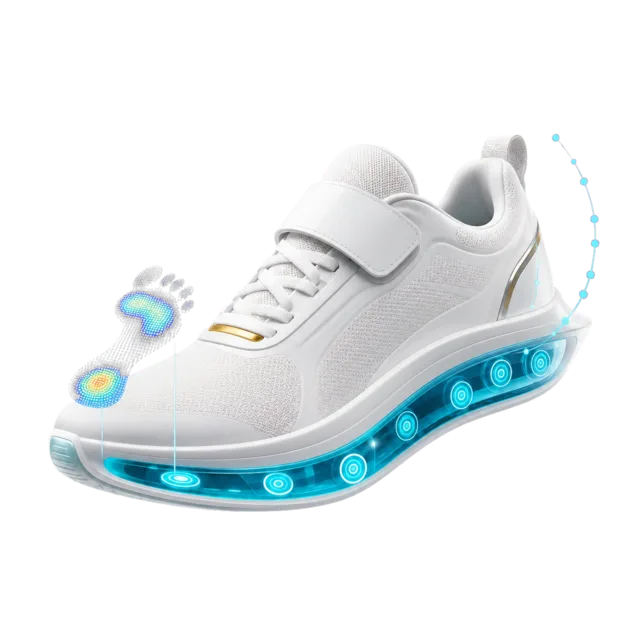
Dubai Smart Shoes
Dubai Smart Shoes is a multi-stage wearable platform concept designed to measure gait, provide feedback and support rehabilitation beyond the laboratory.
Continuous gait feedback through wearable sensing, behavioural support and real-world clinical validation.
Wearables · Rehabilitation
From a clinical problem to a scalable solution
01 Sense
Sense pressure, loading and gait events in real time.
02 Interpret
Interpret movement patterns with clinical AI.
03 Support
Support patients through feedback and behaviour tracking.
04 Validate
Validate accuracy, usability and clinical impact.
Commercialisation
Translation in progress.
The commercialisation pillar moves diagnostics, devices and digital tools from research into clinical practice. Current projects include:
- Dubai Smart Shoes
- Powered RGO
- Gait-analysis application
- Internal-external fixator
Clinical intelligence
AI in diagnostics.
Clinical AI
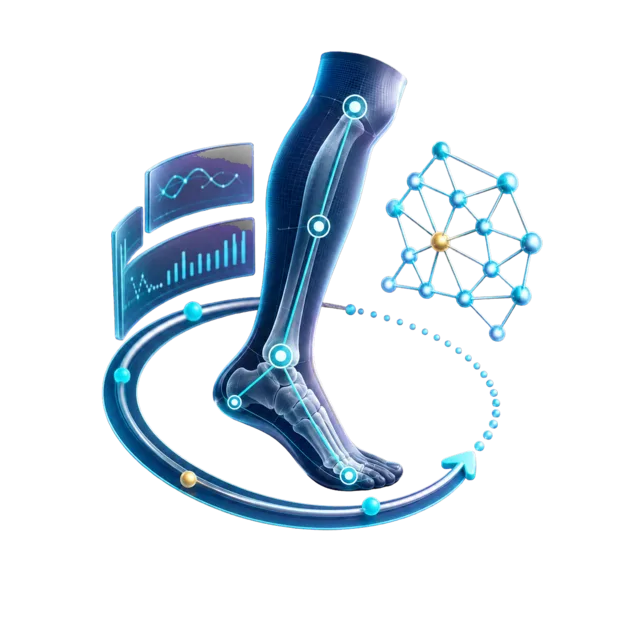
MotionIQ
AI-enabled gait and movement assessment supporting clinical reporting, rehabilitation and research.
Diagnostic AI
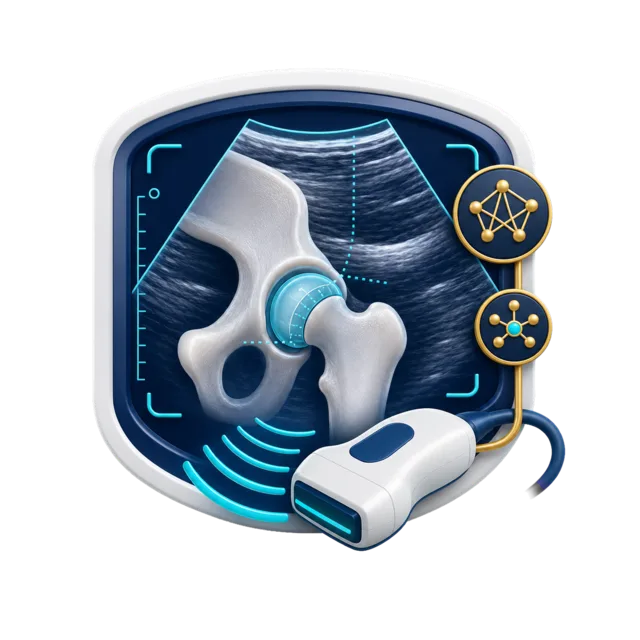
AI Hip Sonography
Decision support for newborn hip ultrasonography, improving consistency and access to early diagnosis.
The clinical intelligence pillar also covers bone tumour histopathology and predictive modelling.
MotionIQ
AI that helps clinicians read gait data.
MotionIQ aims to use AI to help clinicians interpret gait analysis data. The proposed system would combine 3D motion capture, joint movement and force-plate information to produce reports aligned with clinical assessments.
Programme leads: Dr Jennifer Walsh and Professor John R. Woodward.
How it will be developed
- Reports validated against clinician-written reports
- Developed with the gait laboratory at Al Jalila Children’s Specialty Hospital
Intended benefits
Dubai Smart Shoes
Rehabilitation guidance, step by step.
Dubai Smart Shoes is a proposed rehabilitation platform using footwear sensors to measure pressure, weight distribution, heel strikes and walking patterns. Feedback through vibration, sound or other cues could help patients follow rehabilitation guidance and support children receiving gait retraining.
01 Prototype
Build and test the first sensing footwear.
02 Algorithms
Develop the algorithms that interpret walking patterns.
03 Validation
Validate accuracy and usability in clinical settings.
04 Behaviour
Track behaviour and adherence to rehabilitation guidance.
05 Deployment
Prepare for potential deployment.
Later concepts include navigation and fall-prevention features. Programme leads: Professors Mohamed Kenawey and Sattar Alshryda.
Collaborate with UAE TORIC
Partner on innovation.
We work with technology companies, industry partners and funding organisations to validate and scale musculoskeletal innovation.